The Leave Coverage Playbook: POC, Priority, and Zero-Drama Handoffs
Jan 03, 2026 • 2 min read
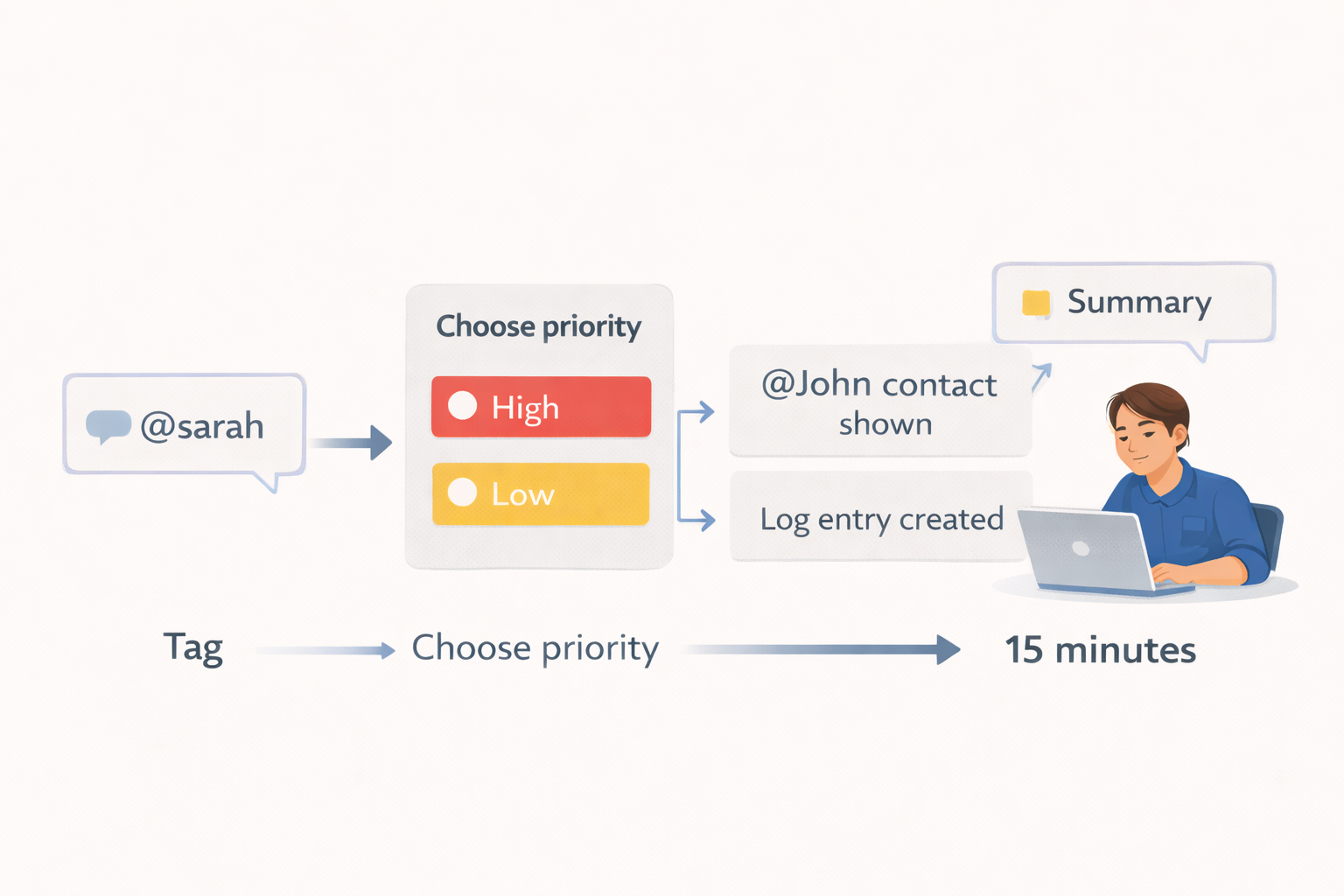
Most “handoff” advice is either too heavy (write a 12-page doc) or too vague (“set a status”). What teams actually need is a lightweight playbook that works in the moment: when someone needs an answer and your usual go-to person is away.
The Goal
Good leave coverage should do two things at once:
- Prevent blocked work while someone is away.
- Prevent return-day chaos when they come back.
The Playbook (Keep It Simple)
Step 1: Define the Point of Contact (POC)
Pick one person (or a rotation) who can handle truly urgent items. Make it explicit: “If this is High priority, go to the POC.”
- POC should be empowered to decide, unblock, and close loops.
- POC should not become a dumping ground for everything.
Step 2: Force a priority decision at the moment of tagging
Don’t ask people to “be mindful.” Ask them to choose: High or Low.
High priority examples
- Production incidents and outages
- Customer escalations with deadlines
- Release blockers
- Approvals that would stop shipping
Low priority examples
- FYIs and updates
- Feature discussions without deadlines
- Meeting notes
- Brainstorms
Step 3: Escalate only High priority
Here’s the trick that reduces backup spam: only show POC details for High priority messages. Low priority gets logged for later without dragging the backup into noise.
Step 4: Return with a summary, not a scavenger hunt
When the person returns, they need a prioritized list with links. High priority first. Low priority in its own bucket. That’s how you start real work quickly instead of spending your morning reconstructing threads.
How Slackoff Implements This
Slackoff turns this playbook into an automatic workflow:
- Set leave once (dates + POC)
- Mentions prompt High/Low priority
- High shows POC; Low stays quiet
- Return summary groups everything with links