Why We’re Building Self-Hosted First (Before Going SaaS)
A Designer’s Story About Validation, Security, and Actually Listening to Users
Nov 20, 2025 • 9 min read
“Just launch the SaaS. Get it in front of users. Iterate fast.”
That’s the standard startup advice.
And it’s… mostly right.
But when I started building Slackoff, I did something different.
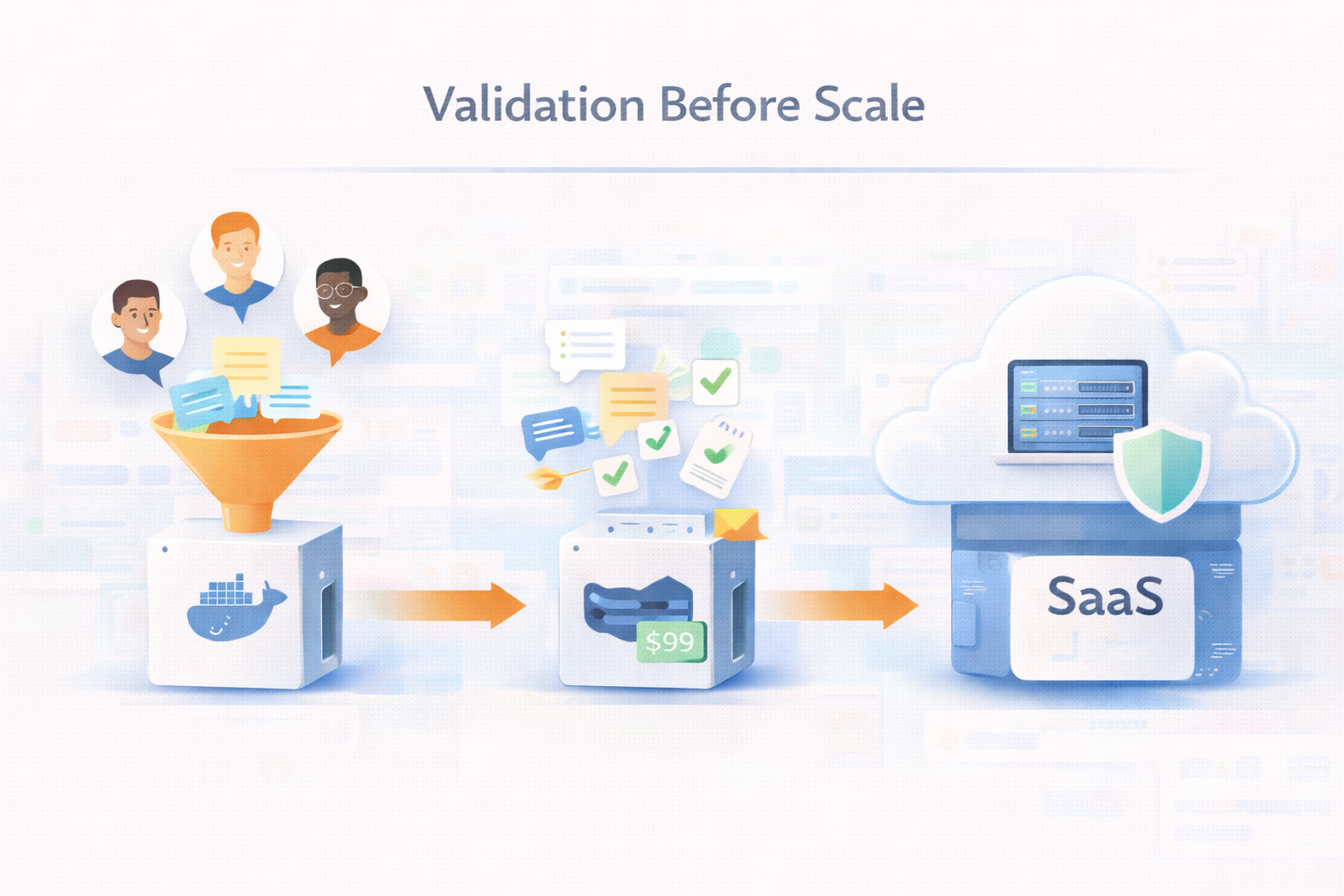
I’m building a self-hosted version first. Selling it for $99. Getting real customers before I even think about SaaS.
People think I’m crazy.
“Self-hosted is dead.”
“Nobody wants to manage their own infrastructure.”
“You’re leaving money on the table.”
Let me tell you why I’m doing this anyway -and why it might be the smartest decision for validation.
The Problem I’m Trying to Solve
Let me rewind.
It’s November 2025. I’m a designer, not a developer. I just returned from a week-long vacation to 73 Slack notifications. Spent 2+ hours sorting through them.
I was frustrated.
“There has to be a better way.”
So I did what any frustrated designer does: I started sketching solutions. Then I learned enough code to build a basic prototype.
First version: A scrappy Node.js script that monitored Slack, responded to mentions, logged everything.
It worked. Kind of.
It was also: Ugly. Fragile. Required my laptop running 24/7.
But it solved my problem.
That’s when I thought: “Maybe this is a product.”
The SaaS vs. Self-Hosted Decision
Standard playbook says: Build a SaaS.
Why SaaS makes sense:
- Recurring revenue (MRR looks good)
- Easier to update (push changes to everyone)
- Lower barrier to entry (just sign up)
- Venture-backable (investors love SaaS)
So obviously, I should build a SaaS, right?
But something felt off.
Why I’m Choosing Self-Hosted First
Reason #1: Validation Without Infrastructure
The SaaS reality:
To launch a proper SaaS, you need:
- Hosting infrastructure (AWS, Heroku, etc.)
- Database management
- User authentication
- Payment processing
- Multi-tenancy setup
- Monitoring and alerts
- Security hardening
- Compliance (GDPR, SOC2, etc.)
Estimated time: 4-6 weeks before you even know if people want it.
Estimated cost: $500-1500/month in infrastructure before first customer.
The self-hosted approach:
- Build the core product
- Package it as a Docker container or install script
- Sell it for $99 one-time
- Customer runs it on their own infrastructure
Time to validation: 2-3 weeks
Infrastructure cost: $0
The insight: If people won’t pay $99 for a self-hosted version, they probably won’t pay $10/month for SaaS either. And if they will? I’ve just validated demand with zero infrastructure costs.
Reason #2: Security Concerns Are Real
When I talked to potential customers in design and product communities, the #1 objection wasn’t price. It was: “Who has access to our Slack data?”
Here’s what people worried about:
- Internal messages being stored on external servers
- Sensitive project discussions
- Client names and details
- Competitive information
- Personal conversations
The SaaS answer: “We encrypt everything. We’re SOC2 compliant. Trust us.”
The self-hosted answer: “Your data never leaves your servers. You control everything. Here’s the source code.”
For teams in regulated industries or those who’ve been burned before, this isn’t just nice-to-have. It’s a requirement.
Reason #3: Complete Ownership as a Feature
One potential customer (a startup CTO) told me:
“We’ve been burned by SaaS tools before. Pricing changes. Features get deprecated. Companies get acquired and shut down. With self-hosted and source code access, if you disappear tomorrow, we’re fine. We can maintain it ourselves.”
This wasn’t paranoia. This was learned experience.
What complete ownership gives them:
- No vendor lock-in
- No surprise pricing changes
- No “deprecated features” announcements
- Full control over updates (upgrade when ready)
- Can modify code if needed (they have the source!)
Reason #4: Learning What Matters Before Building Big
Here’s the thing about being a designer building a product: I have opinions about features. Lots of them.
But I also know my assumptions could be completely wrong.
With self-hosted:
- Customers can modify the code
- They’ll tell me what they actually changed
- I’ll see what features they need vs. what I think they need
- Real usage patterns, not theoretical ones
If I’d built SaaS first: I’d have locked in my assumptions. Built features nobody wanted. Wasted weeks.
With self-hosted: Customers will literally show me what they need by building it themselves. That’s better market research than any survey.
The Challenges (Being Real)
Self-hosted isn’t perfect. Here’s what’s hard:
Challenge #1: Support Complexity
The problem: Each customer might have different OSes, Docker versions, network setups, and Slack workspace configs.
A bug for one customer: might not reproduce for another.
My approach:
- Detailed setup documentation
- Docker container for consistency
- Community Slack channel (ironic, I know)
- Clear system requirements upfront
Challenge #2: Limited Scalability
$99 one-time sales don’t scale like $10/month SaaS.
Month 1: 5 customers = $495
Month 2: 8 more = $792 total
Month 3: 10 more = $1,782 total
That’s not “quit your job” money.
But that’s okay. This phase isn’t about revenue. It’s about validation, feedback, case studies, and reputation.
The goal: Get to 20-30 paying customers. Learn everything I can. Then build SaaS with confidence.
Challenge #3: Updates and Versioning
With SaaS: Push an update. Everyone gets it.
With self-hosted: Customers have to manually update.
What this means:
- Some will update immediately
- Some will be 3 versions behind
- I have to support multiple versions
- Breaking changes are painful
My approach:
- Semantic versioning
- Backward compatibility where possible
- Clear migration guides
- Auto-notification of updates in the app
Challenge #4: The Trade-Off Teams Face
Self-hosted requires: someone technical enough to deploy it, server infrastructure, and ongoing maintenance responsibility.
This isn’t for everyone. Small non-technical teams might prefer SaaS even at higher cost.
But that’s a feature, not a bug. The teams who choose self-hosted are exactly the ones who value data control, have technical capacity, want to customize, and appreciate source code access.
What I’m Learning Already
Even though I’m just starting (November 2025), the approach is already teaching me things:
Learning #1: The Feature Gap Was Real
When I shared early mockups in design communities, the response was:
“Wait, Slack doesn’t have this?”
“I’ve needed this for years.”
“This should be a built-in feature.”
Turns out, it wasn’t just my pain point. It was a common frustration. Slack just hadn’t prioritized it.
Learning #2: Simple Beats Complex
I could build AI-powered priority detection, sentiment analysis, complex routing rules, fancy dashboards.
Instead, I’m building:
- “Is this High or Low?”
- A clean summary on return
The simple version is what people want. Because it’s easier to understand, faster to use, less likely to break, and more likely to get adopted.
Learning #3: Distribution > Features
Building: Takes 80 hours (so far). Getting people to notice: the real challenge.
What I’m trying:
- Building in public (X/Twitter)
- Writing these blogs
- Direct outreach to founders
- Posting in Slack communities
- Leveraging design portfolios
The Path Forward
Here’s my plan:
Phase 1: Self-Hosted Validation (Current - May 2025)
Goal: Get 20-30 paying customers
Pricing: $99 one-time, full source code
Focus: Learn what works, what doesn’t, what features matter
Success metrics:
- 20+ paying customers
- 5+ detailed case studies
- Clear feature roadmap based on real usage
- Community of users helping each other
Phase 2: Feature Polish (June - July 2025)
Build what customers actually need, based on real customizations and feedback from Phase 1.
Phase 3: SaaS Build (August - September 2025)
Launch hosted version with zero-friction onboarding for non-technical teams -after features, pricing, and infra needs are validated.
Phase 4: Both Models (October 2025+)
Offer both:
Self-Hosted ($99 lifetime) - security-conscious teams, regulated industries, teams who want control, companies with DevOps capacity
SaaS ($TBD/month) - teams who want zero maintenance, smaller teams without technical staff, subscription preference, automatic updates and support
The best part? Many might start self-hosted (low risk), then migrate to SaaS (convenience). Self-hosted becomes my top-of-funnel.
What I’d Tell Other Solo Builders
If you’re building a B2B tool, especially as a non-technical founder or designer:
Consider self-hosted first if:
✅ Your product handles sensitive data
✅ Your customers might have compliance needs
✅ You want real validation before infrastructure investment
✅ You can package your product simply (Docker works)
✅ Your market includes technical teams who value control
Skip self-hosted if:
❌ Your product requires real-time cloud infrastructure
❌ Your market is SMB/consumer (they won’t self-host)
❌ Your product needs heavy infrastructure (ML models, big data)
❌ You have funding to spend on validation
The hybrid approach I recommend:
- Build self-hosted first ($99 one-time)
- Get 20-30 paying customers
- Learn everything you can
- Build SaaS with that knowledge
- Offer both going forward
The Bottom Line
Going self-hosted first is saving me:
- 6-8 weeks of infrastructure work
- $3,000-5,000 in hosting costs
- Countless hours building wrong features
- Months of guessing what customers want
Going self-hosted first is getting me:
- Real validation before big investment
- Customers who became product advisors
- Deep understanding of actual use cases
- Trust from security-conscious teams
- A clear, validated path to SaaS
The conventional wisdom says: “Build SaaS. It’s 2025.”
My experience (so far) says: “Build what validates fastest and teaches you most.”
Your mileage may vary. But don’t dismiss self-hosted just because it’s not trendy. Sometimes the old way is the smart way.
Try Slackoff
Want to be one of the early customers?
Self-Hosted: $99 lifetime, full source code, complete data control
You get:
- The full application
- Source code access
- Ability to customize
- One-time payment, no recurring fees
- Support during setup
Perfect for:
- Security-conscious teams
- Companies in regulated industries
- Teams with DevOps capacity
- Anyone who values data ownership